
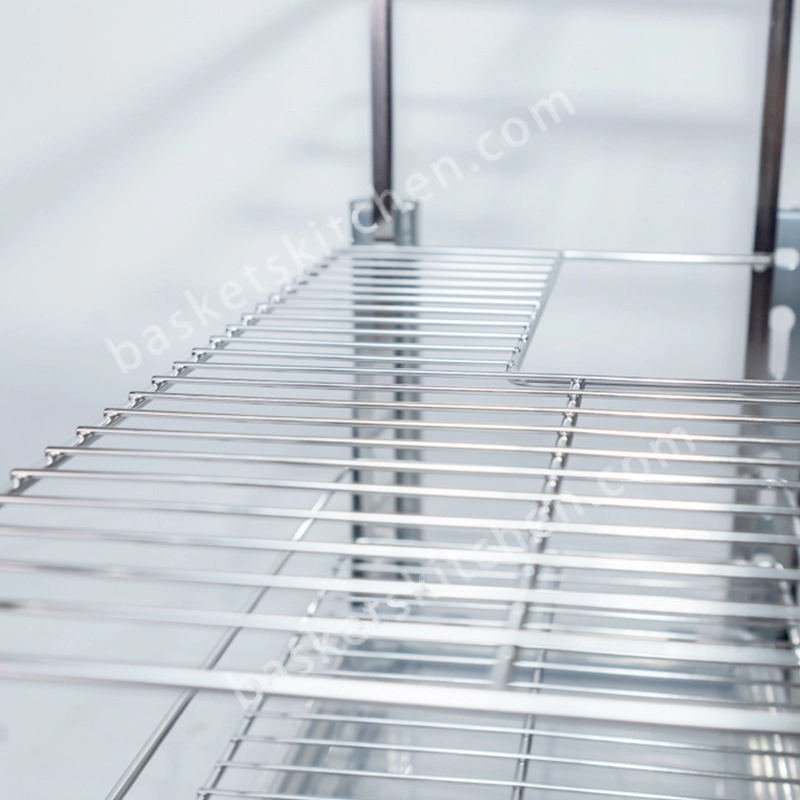
Top 10 Pull Out Spice Rack Ideas to Maximize Your Kitchen Space
Pull-out spice rack ideas are most useful when they start with the cabinet drawing and the items to be stored. For cabinet businesses, importers and distributors, the goal is to match the storage layout, mounting method and access space to the intended range. The ten ideas below include pull-out arrangements and alternatives; fixed inserts and rotating trays should not be described as sliding mechanisms.
1. A narrow base-cabinet pull-out
A narrow pull-out can organize spice jars or bottles inside a suitable base cabinet. Check the minimum clear opening, internal depth and mounting locations. A gap beside an appliance is not automatically an installation space: it needs a compatible cabinet structure and the appliance clearances required by its manufacturer.
2. A drawer insert for spice jars
An insert separates jars inside an existing drawer. The drawer provides the movement; the insert itself may be fixed. Compare upright and angled layouts using the intended jar sizes, and check that the drawer closes without lids touching the structure above.
3. A pull-out tray within a pantry cabinet
Individual pull-out trays can give access to items at different heights without moving an entire tall unit. Confirm the slides, shelf spacing and retaining edges for each tray. Check the door opening and hinge intrusion before selecting the tray width.
4. An accessible wall-cabinet layout
Wall cabinets require a separate check of reach height and the movement path. A horizontal pull-out and a pull-down mechanism are different systems. Ask for the selected model’s installation drawing and demonstration rather than assuming that a base-cabinet rack can be installed overhead.
5. A fixed under-shelf holder as an alternative
A fixed holder may suit a small collection of jars where sliding access is unnecessary. A magnetic strip with compatible containers is another fixed-storage concept, not a pull-out rack. Confirm container retention, shelf attachment and clearance for the intended installation.
6. Corner storage selected by its movement
A rotating tray, a swing-out shelf and a sliding corner basket use different movements. Compare the cabinet opening, left- or right-hand arrangement and open-position clearance. For small jars, also check wire gaps and retaining edges; a corner system intended for cookware may need a different storage layout.
7. Door-mounted storage or a door-linked pull-out
A fixed rack attached to a hinged door moves with that door. A door-linked pull-out uses a mechanism to move storage sections. Specify which arrangement is required and check door loading, hinge clearance and fixings. The two arrangements are not interchangeable.
8. A freestanding countertop organizer
A countertop organizer is an alternative when cabinet installation is not appropriate. Describe it as a pull-out only if the chosen model has a sliding section. Compare the full footprint and stability with the intended contents, including the space occupied when any sliding section is extended.
9. A stepped tray inside a drawer
Raised or angled rows can make jar labels easier to read. Check usable drawer height and jar diameter with a sample. A stepped insert does not need its own slides when the existing drawer already provides access; list the drawer and insert requirements separately.
10. A dedicated spice and bottle basket
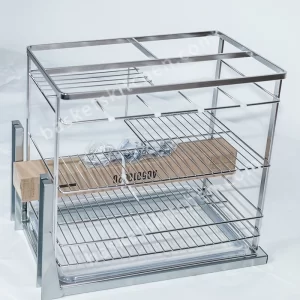
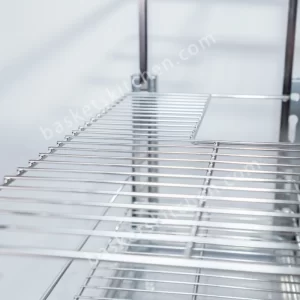
For a cabinet-based range, compare the pull-out spice rack and seasoning basket options against the actual jars, bottles and utensils. “Spice rack,” “bottle pull-out” and “seasoning basket” can describe related storage needs, but the layout and mechanism must match the product supplied.
Our multi-level cabinet storage rack is a separate layout to assess. Confirm its movement, mounting and shelf spacing for the selected version. Do not assume universal cabinet fit or tool-free installation from a product name or photograph.
What to confirm before ordering samples
- Internal cabinet width, depth and height, clear opening, hinges and door arrangement.
- Jar and bottle dimensions, usable storage space and retaining edges.
- Movement direction, extension clearance, mounting hardware and installation instructions.
- Material and finish by component, agreed load limits and any requested closing mechanism.
- Quantity, destination, packaging, branding and instruction-language requirements.
Send a cabinet drawing and your storage requirements to compare suitable versions. Approve the sample in the intended cabinet before confirming the specification for a wholesale or OEM order.
